

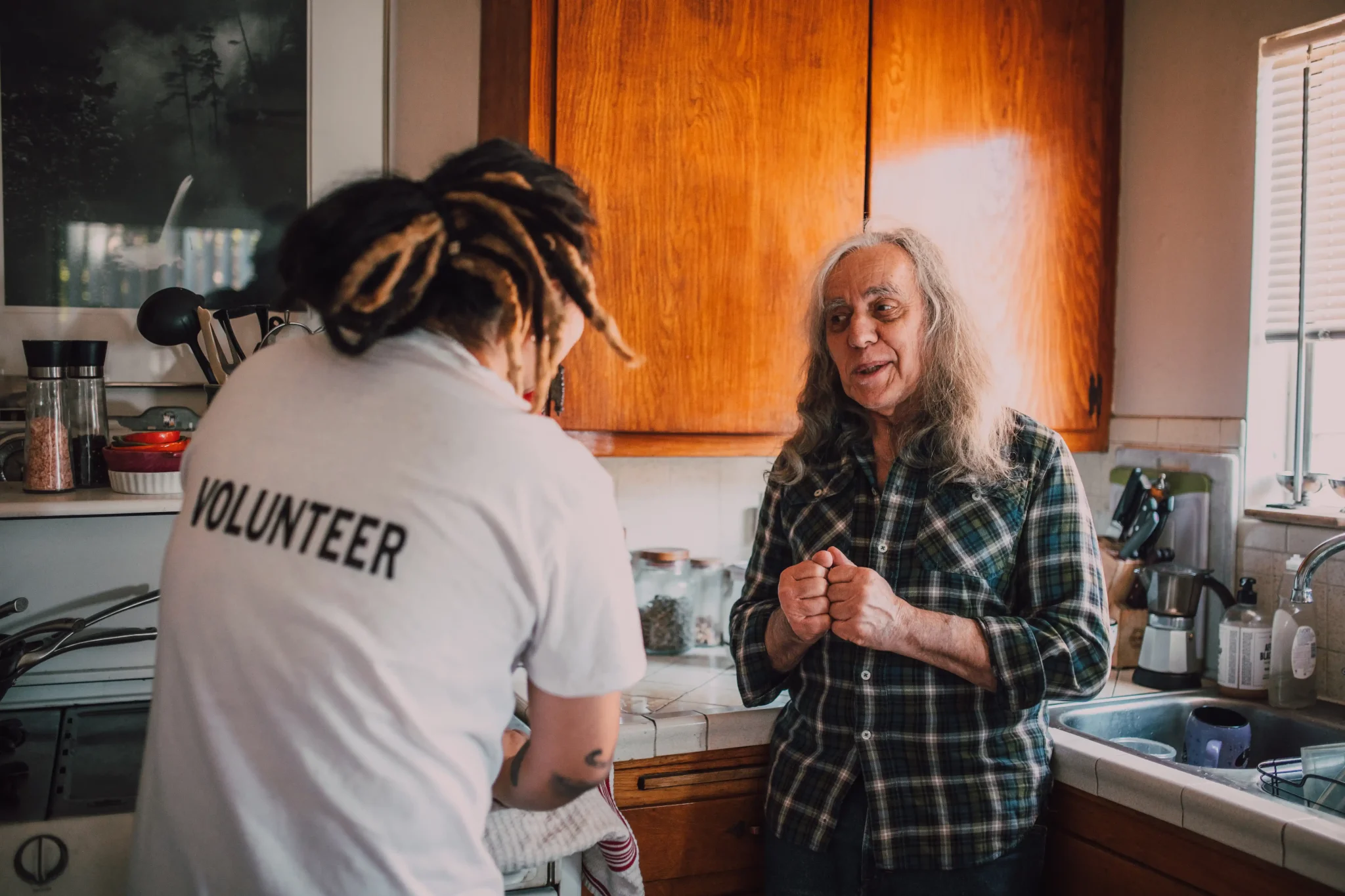
What types of support are available, what is required of those who want to be volunteers, and how can an organization or city council properly organize it?
Companion volunteering involves a volunteer, trained and supported by an organization, regularly visiting or calling an elderly person who feels lonely. It works when there is a stable commitment, prior training, monitoring by the entity, and a relationship designed for the long term. Single visits are not enough.
One hour a week can make a big difference in someone's life. Below you'll find the different types of support, who each one is best suited for, what's needed to volunteer, and how to organize it effectively through an organization.
In Spain, more than two million people aged 65 and over live alone. Support can be provided in person, by phone, or a combination of both. The key is consistency: the same person, the same day, for months on end. Organizations select, train, and support the volunteers.
What it is and why it matters
How many elderly people live alone? According to the INE's Continuous Household Survey of 2020, 2.131.400 people aged 65 or over lived alone in Spain, and 70,9% of them were women.
Pay attention to this: living alone doesn't necessarily mean feeling lonely, but it does increase the risk. Many of these people, especially older widows, have fewer and fewer contacts as they lose mobility or friendships. Voluntary support does not replace family or services, but it fills a gap that neither of them fully covers.
Five types of accompaniment
| Type | How it works | Who is it suitable for? |
|---|---|---|
| Home visits | The same volunteer comes every week to chat, take a walk, or run errands. | Someone who doesn't go out much and values face-to-face contact |
| Telephone | Regular calls, often weekly, always with the same person | Rural areas or very limited mobility |
| In nursing homes and hospitals | Visits to residents or patients who rarely receive visitors | Institutionalized people with little family support |
| To negotiations | Going with the person to the doctor, the bank, or to run errands | Who feels unsafe going out alone |
| Group activities | Volunteers who lead workshops, walks or informal gatherings | Someone who is already going out and looking to expand their relationships |
How to volunteer
- Look for a reputable organization. Social organizations, parishes, senior citizens' associations, or municipal programs. Ask at your local council's social services department.
- Pass the interview and training. Good organizations select and train before assigning anyone.
- Commit to what you can deliver. Better one hour a week for a year than three hours for a month.
- Sign the volunteer commitment. The entity must assure you and explain your rights and duties.
- Ask for support when you need it. If something comes up that worries you, the organization should be there to guide you.
A word of warning: the volunteer accompanies, does not take care of. It is not their responsibility to perform hygiene tasks, administer medication, or substitute for professionals. If they identify such a need, they should inform the organization.
How to organize it well from an entity
Short answer. Match carefully, present in person, follow up, anticipate absences, and measure if it works.
- Pair carefully: Tastes, character, schedules and geographical proximity matter.
- First accompanied visit: A professional introduces the volunteer to the elderly person.
- Regular follow-up: a monthly call to the volunteer and another to the person being accompanied.
- Absence plan: Volunteer vacations or absences should not leave the person without contact.
- Close carefully: If the relationship ends, preparations are made in advance and, if possible, a replacement is sought.
- To size: A short loneliness questionnaire at the beginning of the six-month period helps to determine if it works.
Volunteering fits very well into a local plan against loneliness, alongside detection and neighborhood activities, as we explained in What can local councils do to combat unwanted loneliness?And technology, from video calls to... social robotics with whom we work in Inrobics, can maintain contact between visits, without ever replacing the volunteer.
Checklist for those who want to be volunteers
FAQ
Visit or call an elderly person regularly to chat, go for walks, or accompany them on errands. Do not provide care or replace professional caregivers.
One or two hours a week is typical. The important thing is not the amount, but maintaining consistency over several months.
Through social service organizations, senior citizens' associations, or municipal programs. Your local council's social services department can tell you which ones are available in your area.
Yes, especially in rural areas or with people who can't go out. It works best if it's always the same person and at the same time.
You can check with the social services department of the town hall or directly with organizations in your area that have programs to support elderly people.
Fonts
- INE. Continuous Household Survey 2020, April 2021.
None of the links in this article are sponsored. Inrobics We develop social robots for care centers and services; when we talk about our technology, we make that clear.
Maintain contact between visits
If you coordinate a mentoring program and are interested in combining it with technology that offers activity and companionship, we'll tell you how we do it.
Let's talk for 15 minutesWithout obligation
Read
"Better one hour a week for a year than three hours for a month."
