

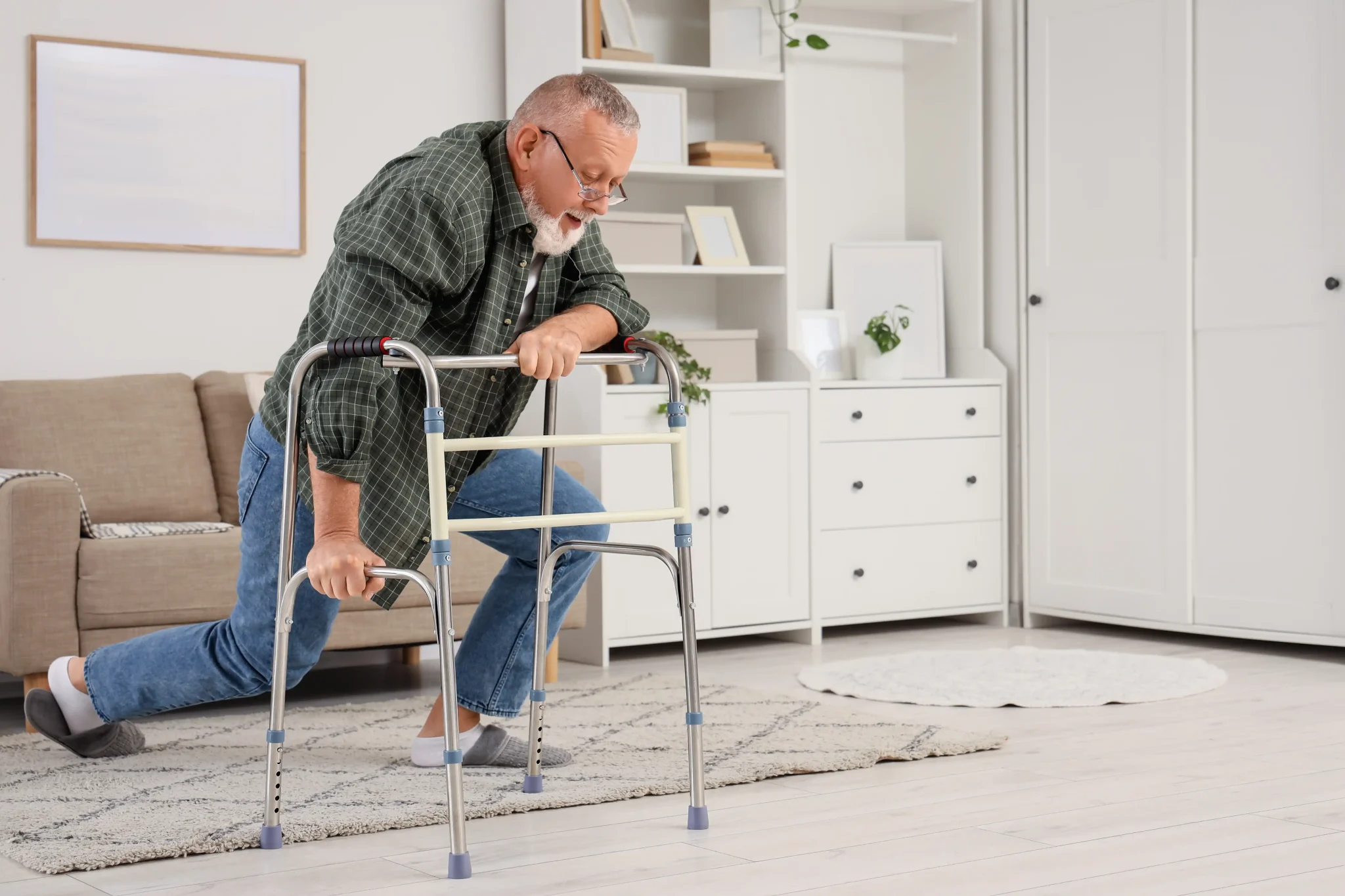
What to check in each room, what habits reduce the risk, and why balance exercises are the most scientifically supported measure.
To prevent falls at home, it's advisable to combine three things: adapting the home, maintaining safe habits, and Above all, do balance and strength exercises regularlyThe house is checked in an afternoon; exercise is what most reduces falls.
A fall might seem like a minor accident, but for an older person, it can change everything: a hip fracture, a long recovery, and often, a fear of falling again that leads to decreased mobility. Below you'll find a room-by-room review, helpful habits, and what the evidence says about exercise.
Falls are the second leading cause of unintentional injury death worldwide, with people aged 60 and over being at the highest risk. Balance exercises reduce the number of falls by around 23%. A home assessment can eliminate many hazards in an afternoon.
Why do falls matter so much?
How many serious falls are there? According to the World Health Organization, falls cause approximately 684.000 deaths worldwide each year and are the second leading cause of unintentional injury death, after road traffic accidents. Each year, some 37,3 million falls require medical attention, with people aged 60 and over experiencing the highest number of fatal falls.
The good news is that many falls can be prevented. The WHO recommends, among other measures, adapting the home, reviewing medication, and doing gait, balance, and functional training exercises.
Room-by-room review
Spending an afternoon walking through your house with this chart in hand can eliminate many risks without spending almost anything:
| Area | What to check | Simple change |
|---|---|---|
| Entrance and hallways | Loose rugs, cables, objects on the floor, poor lighting | Removing or securing carpets, tidying up cables, sensor lights |
| Livingroom | Low furniture in the passageway, very sunken armchairs | Clear the usual paths, firm armchair with armrests |
| Kitchen | Everyday items in attics, slippery floor | Lower everyday items to waist height, dry the floor immediately |
| Bathroom | High bathtub, wet floor, nothing to hold on to | Non-slip mat, grab bars, shower seat; if possible, shower tray |
| Bedroom | Walking to the bathroom in the dark, bed too low or too high | Night light along the route, lamp within reach, bed at a comfortable height |
| Stairs | No handrails, steps barely visible | Handrails on both sides, colored tape on the edge, good lighting above and below |
If you can only change one thing, start with the bathroom and the nighttime route from the bedroom to the bathroom: these are the areas where the risk is most concentrated.
Habits that reduce risk
- Wear closed, non-slip shoes, even at home. Open-toed shoes are a frequent cause of tripping.
- Get up slowly. Especially when getting out of bed: sit down for a few seconds before standing up.
- Review your medication with your doctor. Some drugs cause dizziness or drowsiness.
- Check your eyesight and hearing. Periodically.
- Keep your phone or a reminder handy at all times. In case of a fall.
- Do not hurry. Many falls occur when running to pick up the phone or open the door.
Exercise, the most effective measure
Short answer. Adapting the home helps a lot, but the measure with the most scientific support is exercise. A 2019 Cochrane review, with 108 trials and more than 23.000 participants, concluded with high certainty that it reduces falls in older people living at home.
Programs based primarily on balance and functional exercises These are the exercises that showed the clearest effect. In practice: getting up from a chair without using your hands, standing on your tiptoes while holding onto the counter, walking in a straight line, or standing on one foot with support. Ideally, a physiotherapist should assess your balance and recommend appropriate exercises. If you're interested in how it's measured, we explain it in [link/section/etc.]. Berg's balance scale and in the most commonly used balance assessment tests.
En Inrobics We work on balance training with exercises guided by robots and avatars, always following the plan set by the physiotherapist.
If there has already been a fall
After a fall, even if there are no injuries, it is important to discuss it with your doctor: there may be an underlying cause that should be investigated, such as dizziness or a side effect of medication.
A warning about the fear of falling. If a person starts to avoid movement, they will lose strength and balance, and the risk will increase. We discussed this in Kinesiophobia, or fear of movement.
Quick checklist
FAQ
Adapting the home with good lighting, no loose rugs and grab bars in the bathroom; wearing closed shoes; reviewing medication with the doctor; and doing balance and strength exercises regularly.
Yes. A 2019 Cochrane review found that exercise reduces the number of falls by around 23% in older people living at home.
The bathroom is often the most dangerous place due to the wet floor and lack of support. The nighttime route from the bedroom to the bathroom is also risky.
Discuss it with your doctor to look for possible causes and be aware of the fear of falling, which can lead to less movement and increase the risk.
Some medications can cause dizziness or drowsiness. The WHO recommends reviewing your medication as part of prevention; always do this with your doctor.
Fonts
- World Health Organization. Falls. Descriptive note, April 2021.
- Sherrington C, et al. Exercise for preventing falls in older people living in the community. Cochrane Database of Systematic Reviews, 2019.
None of the links in this article are sponsored. Inrobics We develop guided exercise tools for centers; when we talk about our technology, we indicate this.
More balance sessions, with the same team
If you work in a center and want to reinforce balance programs with guided exercises, we'll tell you how we do it with robots and avatars.
Let's talk for 15 minutesWithout obligation
Read
"The house can be fixed in an afternoon; balance is practiced every week."
