

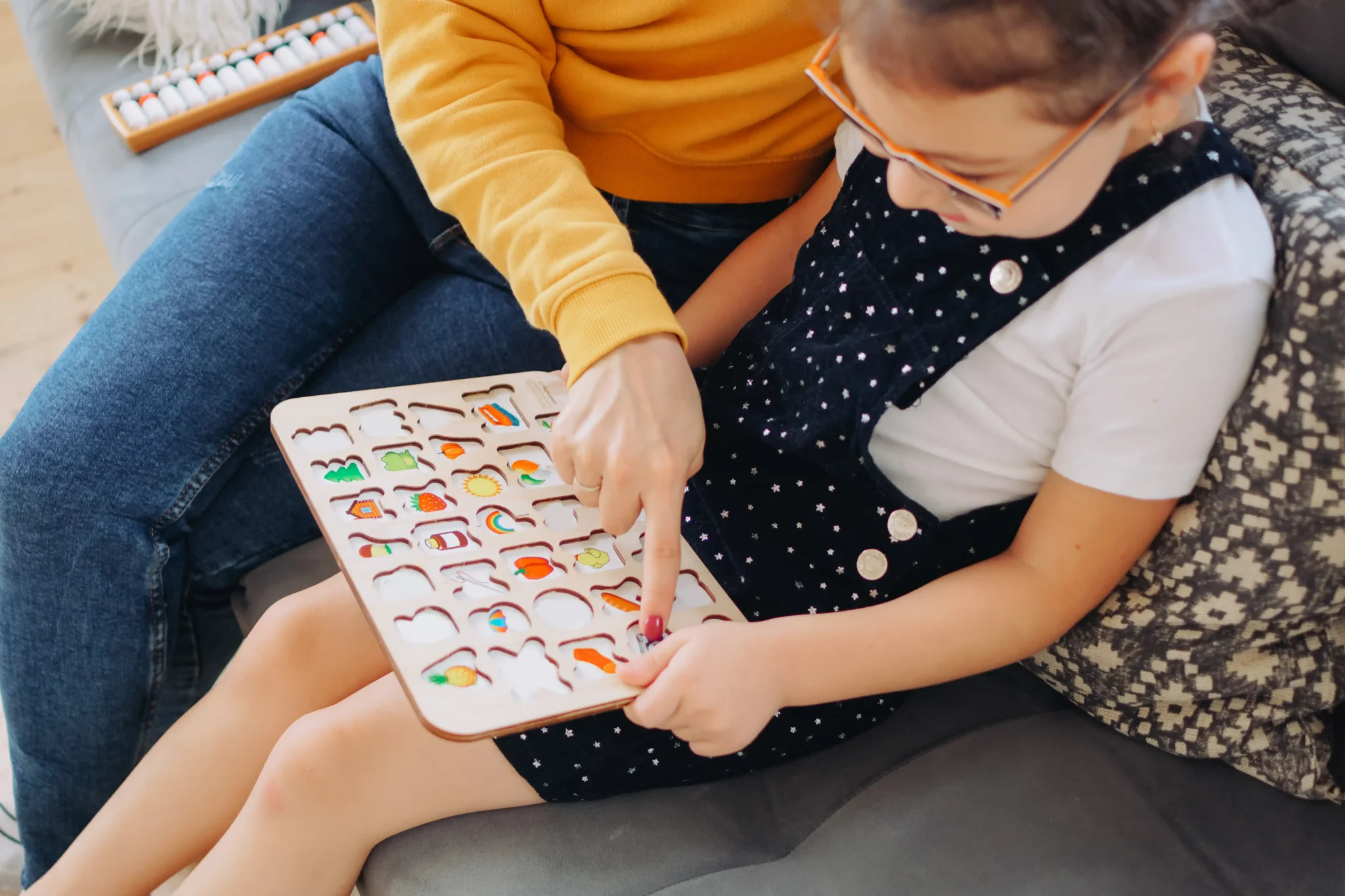
Two documents that determine many school support programs. What they are, how they are implemented, and what the family can say.
Psychoeducational assessment is a study conducted by guidance services to understand a student's needs, abilities, and barriers, and to determine what support they require. The school placement report, for students with special educational needs, proposes where and how they should be enrolled in school, and with what resources. The law requires listening to and informing the family throughout the process, and reviewing schooling every year.
The names of the teams and some steps vary depending on the autonomous community, but the logic is the same. Here's what each document is, how to prepare it, and how to participate.
Article 74 of the Organic Law on Education requires identifying needs as soon as possible, with qualified personnel, and listening to and informing mothers, fathers, or guardians. If there is disagreement, the authorities must have a procedure that takes into account the child's best interests and the family's preference for the most inclusive option. Always request a copy of the reports and submit your opinion in writing.
Two different documents
| Appearance | Psychoeducational assessment | Schooling decision |
|---|---|---|
| What is | A process of collecting and analyzing information that culminates in a report | A document outlining the proposed schooling model and resources |
| For whom | Any student who may need individualized measures | Students with special educational needs |
| Who does it | The guidance team or department, with teachers and family | Guidance services, based on the assessment |
| When | When needs are identified, when schooling begins, when changing stages | When enrolling in school for the first time, when changing stages or modalities |
Do not confuse this with a disability certificate, which is a social services procedure. We explain it in Disability and dependency: differences.
How to do it, step by step
- Detection. The tutor, the teaching team, or the family itself observe difficulties or abilities that require a different response.
- Application and authorization. The center requests guidance intervention. In some regions, express authorization from the family is required; in the Community of Madrid, for example, Decree 23/2023 mandates it.
- Information gathering. Classroom observation, tests, family interviews, and health or early intervention reports.
- Report. It gathers the student's situation in their different contexts, their strengths, the barriers and the proposed measures.
- Opinion, if applicable. For students with special educational needs, the schooling modality and resources are proposed.
- Review. The law requires evaluating the results at the end of each course and adjusting the support, seeking the most inclusive approach possible.
Family rights
What exactly does the law say? Article 74.2 of Organic Law 2/2006, as amended by the LOMLOE (Organic Law for the Modification of the Organic Law on Education), establishes that mothers, fathers, or guardians must be heard and informed during the identification and assessment of needs. It also requires public authorities to regulate how to resolve disagreements, taking into account the best interests of the child and the wishes of families who prefer a more inclusive approach.
This procedure is not always well-developed. In February 2024, the Ombudsman recommended that the Community of Madrid regulate a procedure for resolving disagreements with families regarding the assessment and school placement proposal, with deadlines and a reasoned decision.
How to participate in the process
- Contribute everything you have. Medical reports, early intervention reports, or reports from external therapies help to complete the picture.
- Describe what it's like at home. What he does, what it costs him, and what motivates him outside of school is valuable information.
- Request a copy of the reports. And a meeting to have the conclusions and proposed resources explained to you.
- Leave your opinion in writing. Many communities include a document for family input; use it.
- Ask when it will be reviewed. Schooling is not permanent and must be reviewed each year.
- If you disagree, state so. Ask at the school or the education inspectorate what the disagreement procedure is in your community.
To ensure your relationship with the center works well throughout the course, here are some ideas: coordination between school and family in special educationAnd regarding the types of schooling, in inclusive schools and special education centersIf the report includes adaptations, look Curriculum adaptations: types and who makes them.
Family checklist
FAQ
It is the process carried out by guidance services to understand a student's needs, abilities, and barriers and to decide what measures and support they require. It culminates in a report.
It is the document that, for students with special educational needs, proposes the type of schooling and the necessary resources, based on the psycho-pedagogical evaluation.
It depends on the autonomous community. In some, like the Community of Madrid, parental authorization is required. In any case, the law requires that mothers, fathers, or guardians be heard and informed.
Put your concerns in writing and ask the school or the education inspectorate about the disagreement procedure in your region. The law requires that the child's best interests and the family's preference for the most inclusive option be taken into account.
No. The law requires evaluating the results at the end of each course and adjusting the support and schooling, seeking the most inclusive approach possible.
Fonts
- Organic Law 2/2006, on Education, article 74, as amended by Organic Law 3/2020. Text in Iberley.
- Ombudsman. Schooling of students with special educational needs (complaint 23021278), February 14, 2024.
- Regional Government of Castilla-La Mancha, Educational Inclusion Service. Psychoeducational assessment: what does the regulation tell us?
None of the links in this guide are sponsored. This content is for informational purposes only and does not replace advice from the guidance team or consultation of the regulations in your autonomous community.
One more support in the special education classroom
If your center wants to add guided and motivating activities for students with support needs, we'll tell you how we work.
Let's talk for 15 minutesWithout obligation
Read
"No one knows a child better outside the classroom than their family."
