

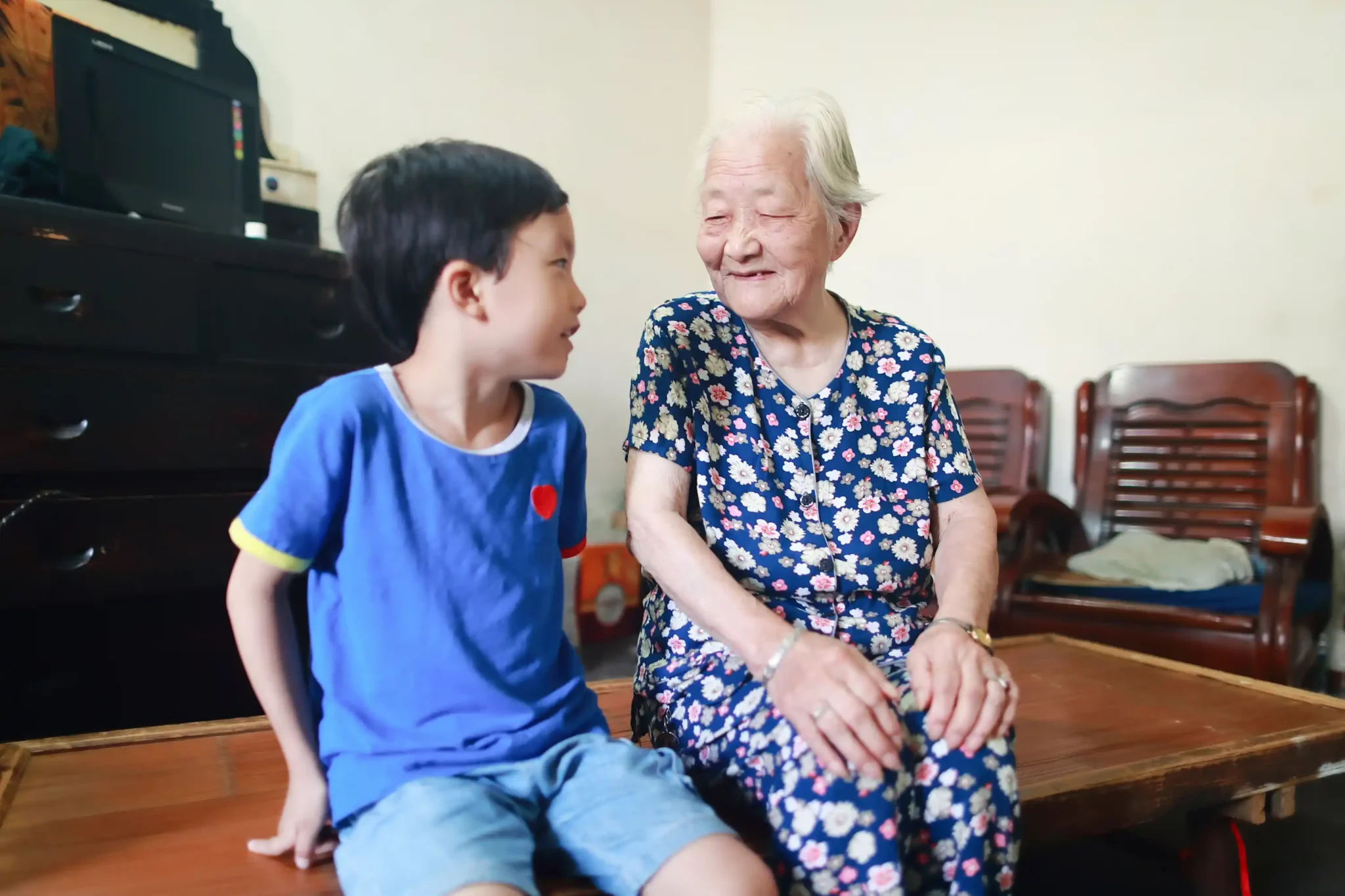
Children notice changes before we even explain them. What to say to them depending on their age and how to help them continue enjoying their grandfather.
Children should be told about dementia early, honestly and using age-appropriate language, starting with what they have already noticed. Knowing what's wrong with their grandfather takes away their fear and guilt, and helps them to continue spending time with him in a different way.
Below you'll find why it's better not to wait, what to say depending on age, what emotions are normal, and activities to continue enjoying time together.
Children sense the tension at home even if no one explains anything to them. A simple, honest, and age-appropriate explanation helps them understand and stop feeling guilty. There's no right way to feel. Focusing on what Grandpa can still do helps maintain the bond.
Why waiting is not a good idea
Isn't it better to protect them? Silence doesn't protect them. The children notice that their grandfather repeats things, gets angry for no reason, or can't remember their name, and that the adults are worried. Without explanation, they may think they've done something wrong or that their grandfather no longer loves them.
Dementia is common: the Spanish Society of Neurology estimates that there are around 800.000 people in Spain with Alzheimer's, the most common cause. Many children will experience it firsthand, and understanding it also helps them treat older people with respect.
What to say depending on age
| Age | How to explain it | Example |
|---|---|---|
| Small | Start from what they have seen, with short sentences and stories or drawings | "Grandpa has a mental illness that makes him forget things. It's nobody's fault." |
| Visits | Ask what they know and what worries them, and explain clearly and simply. | "It's called dementia. It makes it hard for him to remember, and sometimes he gets confused or angry." |
| Teens | More information, more emotional support, and letting them set the pace. | Explain the diagnosis, how it may progress, and where to get good information. |
Guidelines based on the Alzheimer's Society guide to explaining dementia to children and young people.
With teenagers, it's important to remember that a lot of unreliable information circulates online. Encouraging them to ask questions at home, or to their family doctor, prevents them from forming misconceptions.
Emotions that may appear
- Sadness because grandpa no longer plays or doesn't remember what it used to be.
- Fear or shame in the face of strange behavior, especially in front of friends.
- Anger because the family dedicates a lot of time to care.
- Guilt if they think they have caused something or because they feel angry.
- Concern in case it happens to their parents or to them.
Short answer. There's no right way to feel. The important thing is that they know they can talk about it without being judged, and that they're not alone.
Activities to continue enjoying together
- Look at old photos. Distant memories tend to be preserved longer, and grandpa can tell stories.
- Play music from his era. Singing and dancing unites without the need for many words.
- Do things with your hands. Watering plants, kneading dough, painting, or folding clothes together.
- Go for a walk. A short walk around a familiar place is a simple shared activity.
- Use humor. Laughing together when possible relieves tension.
A notice about the loads. Children's participation doesn't mean they have to take care of others. Avoid giving them adult responsibilities and inform the school if you notice changes in their mood or performance.
If your grandfather lives in a care home, the ideas from [insert ideas here] might be helpful. quality visits in a residenceAnd to better understand some of the reactions, let's review how to deal with difficult behaviorMany centers, including those that work with InrobicsThey organize activities that grandchildren can join.
Checklist for the conversation
FAQ
At any age, adapting the words. With young children, it's enough to start with what they've seen using short sentences; with older children, you can give more information.
Explain to him that it is the illness that makes him forget, not that his grandfather no longer loves him, and that affection can be felt even if he doesn't remember his name.
In general, yes, if they are prepared and the visit includes a simple activity. It's best if the visits are short and the child can leave if they feel uncomfortable.
Sadness, fear, shame, anger, or guilt. They are all normal. The important thing is that people can talk about them without feeling judged.
This can be helpful, especially if you notice changes in the child's mood or performance. The guidance team can offer support.
Fonts
- Alzheimer's Society. Explaining dementia to children and young people.
- Medical Writing. In Spain there are 800.000 people with Alzheimer's and that number will double in 20 years, with data from the Spanish Society of Neurology, September 2020.
None of the links in this article are sponsored. Inrobics We develop social artificial intelligence for day centers and residences; when we talk about our technology, we indicate this.
Activities that unite generations
If you want to organize activities that grandchildren and families can join, we'll tell you how we do it with social robotics.
Let's talk for 15 minutesWithout obligation
Read
"Grandpa may forget a name; the affection is still evident."
